Saturday, 7 July 2012

where was the 7/7 anniversary tribute?

click to read more about the 7/7 memorial in Hyde Park

We’re big on anniversaries nowadays. Dickens, Shakespeare, the Antarctic treaty, the list goes on. So, on 7 July, where was our state broadcaster’s anniversary tribute to the victims of the 7/7 bombings?

And yet, the anniversary was nearly marked in a negative way. Dymphna, posting on the Gates of Vienna, suggests that the suspected terrorist who was arrested for casing the Olympic may have been looking for a way to mark the seventh anniversary of 7/7.

Dymphna points to the generational strategy Islamists have taken in Egypt that have given them control of the armed forces, and wonders if the same thing is happening here. It’s entirely possible, but I wonder if there isn’t another factor causing distress among those who look at the West with covetous eyes.

read more about Islamic opposition to the London megamosque

In the three years that the English Defence League has been in existence, there has been unprecedented pressure on the police hierarchy and the Crown Prosecution Service to act on Muslim child grooming gangs, certainly, but more subtle currents have also been finding their way to the surface. In the absence of a formal anniversary tribute to the victims of 7/7, it’s fitting that the Center for Islamic Pluralism is leading a campaign against the Markazi Masjid mosque in Dewsbury (left) because of the movement’s links with terrorists, not least two of the 7/7 bombers. And Muslim parents have been campaigning against a proposed "megamosque" on the Olympic site because they don’t want their children radicalised.

I believe current Islamist threats in Britain, including the bomb possibly intended for EDL supporters in Rochdale, are aimed at moderate, westernised Muslims and those open to dialogue with them. Social Services threats to remove the child of a pregnant woman because of her support for the EDL almost certainly have a similar focus. In a spirit of respect for the victims of 7/7, I suggest that this is not the time to give up on moderate Muslims.

Gerry Dorrian
300 words

Resources

Read about the 7/7 memorial in Hyde Park

Tommy Robinson talks to Giles Coren about Social Services threats to remove a pregnant woman's baby at brith because of her support for EDL. Watch below, or click to watch here on YouTube.

Monday, 2 July 2012

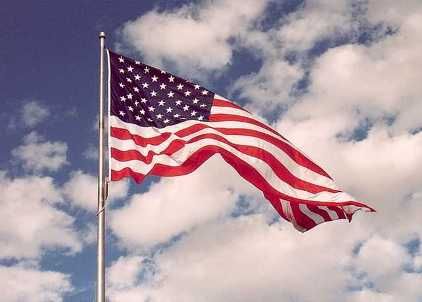
Happy 4th of July!

A statement in the Demos report on the English Defence League caught my eye: “groups [like the EDL] lay claim to the mantle of the enlightenment, espousing support for fundamental liberal values of free speech, democracy and equality”.

I don’t know how to lay claim to such a prolonged and heterodox phenomenon. For example, the EDL (and other friends of Israel) would treat with caution the "mantle" of the European Enlightenment, because in its scramble towards rationalism it adopted as its standard the premise that the human race was perfectible solely through that which it contains. A line runs from that premise, passes through eugenics, and leads straight to the Holocaust.

Other European Enlightenment figures thought in terms of religious and political conflicts that had blighted the continent. Hobbes and Locke theorised about what the relationship should be between a people and their prince. Rousseau abolished the prince and, in failing to prescribe any other central power, created a vacuum that communism would fill with fascism.

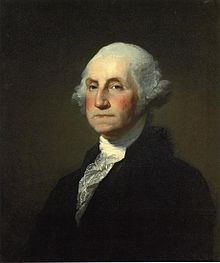
George Washington

The American Enlightenment is the crucible that forged philosophies to fire today’s patriots worldwide. The Founding Fathers, defeating a colonial power, found themselves, literally, in a new world. Anxious to avoid the excesses of the old, people of the calibre of, say, George Washington (right), Thomas Paine and Thomas Jefferson worked on avoiding the trap that France would soon fall into by killing a king and ending up with an emperor.

Replacing the Declaration of Independence with the Constitution, they sidestepped the problem (as Popper would later define it) of any movement engendering within itself its own opposition. Its checks and balances recognised that a society’s soul resides not in forced homogeneity but in the spaces between its contradictions.

In the face of renewed colonialism, may God bless us all; and, in particular, may this Scot wish: God bless America!

Gerry Dorrian
300 words

Old Glory: flag of the United States of America

Sunday, 1 July 2012

EDL Bristol demo - newpaper site runs summary of summary of flawed survey

NB: page numbers referred to for the Demos report Inside the EDL are for the .pdf (online) document. Subtract 2 to get page numbers in the hard copy.

click to find out more about the Bristol demo

In anticipation of the English Defence League's march in Bristol on 14 July, This is Bristol have released excerpts from Demos’ inside the edl: populist politics in a digital age.

Except, they haven't. what they have released is excerpts from the EDL Mission Statement, interspersed with a summary of the Guardian's summary of the Demos report: a third-hand report.

Jamie Bartlett: click to read more at the Demos website

To suggest there are flaws in Demos' report says nothing that authors Jamie Bartlett (left) and Mark Littler haven’t indicated themselves.

There are two areas that give me trouble.

Firstly, the sample were self-selected – ads on Facebook may have been answered by trolls, members of EDL groups who were there to give people the wrong ideas about what we are about. The authors’ guess on p35 is that about 10% of its respondents were trolls, whereas others set the figure for infiltrators at a quarter. Which is true could make a lot of difference to interpretation of the findings. Might trolls be more motivated to self-select? (I should add that self-selection was famously ridiculed when it led Dr Kinsey to report that 8% of men and 3% of women have sex with animals.)

My second problem is a table on p26 of the .pdf comparing EDL members’ attitudes on views to the "national average". A footnote reveals the national average to have been taken from the Eurobarometer 2011 study. An EU webpage indicates gaining attitudes about climate change was a priority for this, so it’s perhaps no surprise that no "national average" opinion available for "security" and "strong government" – the strongest EDL priorities - was available.

Think-tanks usually fish for funding by indicating further study is needed. But the authors’ statement to this effect on p39 is accurate, if not an admission that the "large-scale empirical study of the EDL" promised on p5 fails to materialise.

Gerry Dorrian
300 words

Resources

Click to go to the Demos report inside the edl: populist politics in a digital age

Click for the EDL LGBT statement on the Bristol demo (which is on the same day as the Bristol gay pride)

Saturday, 30 June 2012

the BBC's Richard II: uncovering Shakespeare?

click to go to Richard II on the BBC website
Shakespeare’s Richard II is most famous for the playwright’s beautiful hymn to his native land which ends "This blessed plot, this earth, this realm, this England". I highly recommend the BBC’s latest production of it.

Prof Marjorie Garber: click to learn more
The play was followed by a documentary presented by Derek Jacobi (Richard in 1978). Harvard University’s Professor Marjorie Garber proposed an insight I found fascinating: during the deposition scene Richard’s cry "Ay; no; no; ay" sounds like "I know no I", and elaborates "he cannot distinguish between his role and his persona"; similar confusion would earn Jean-Paul Sartre many free lunches.

On the vexed issue of authorship Jacobi’s interviewee, Jason Lindsay – descendant of candidate Edward de Vere, 17th Earl of Oxford – opined disappointingly that "a mere middle-class boy from the provinces" could not have produced such work. Personally, coming from a country whose Bard was a farm-labourer, I have no problem believing in Shakespeare’s literary abilities.

Richard II deals with monarchs’ divine right to rule, and there were the inevitable comparisons with tyrants such as Gaddafi, Saddam Hussein and Ceaucescu. Perhaps, given her own deposition, comparisons with Margaret Thatcher were also inevitable. What bothered me was that after the section about Thatcher’s downfall, expertly tied into the play by journalist John Simpson, Jacobi repeated that Richard II should make "tyrants" tremble. He also stated that her betrayal occurred because of the unpopularity of the “poll tax” – it wasn’t. Mrs Thatcher’s opponents wanted to take Britain into the heart of Europe, an ambition which would have resulted in existential threat in the present crisis.

As this threat hangs over parts of Europe it’s disappointing to see the BBC use Shakespeare to make ideological points about its bugbear, Margaret Thatcher. I support its right to free speech, but why do I have to fund it to say things I find distasteful?

Gerry Dorrian
300 words

Resources

Click to go to Richard II on the BBC website

Click to watch Derek Jacobi's Shakeapeare Uncovered documentary

Click for an online script of Richard II

Wednesday, 27 June 2012

Shipbuilding - was it worth it?

"Every conflict, every war that’s been waged in our time, has had its soundtrack: calls to arms, calls to lay down arms, but nothing like Shipbuilding."

click to go to Annie Nightingale's Radio 1 homepage

Thus Annie Nightingale (right) introduced Is it worth it? showcasing Robert Wyatt’s Falklands War-era song, written by Elvis Costello. It was named after the first line, and by halfway through the hour-long documentary I'd heard those words sung so often I was asking myself the same thing.

My heart sank from the moment Nightingale mentioned "the controversy over who the Falklands Islands – or Las Malvinas – should belong to". Then followed paeans to music’s ability to express anti-capitalist sentiments as well as Pat Kane of Hue and Cry declaring that to have people building ships for the navy to prosecute war from – the theme of Shipbuilding – was both "dignified and shameful" and an offshoot of "the poisonous need to create contracts" for industries that supply the military.

read about the Falklands War at the Margaret Thatcher Foundation

The second half-hour was balanced by contributions from shipbuilders, veteran Andy Eakins and war-widow Barbara Macauley. But it failed to present the Falklands War as more than a product of Margaret Thatcher doing things that annoy the BBC.

For instance, scriptwriters might have mentioned that while Britain and Spain had often disputed ownership, the Islands never belonged to Argentina. That the Islanders are predominantly of British and American descent. Or, indeed, that Pope Alexander VI prepared the ground for conflict in 1494 by arbitrarily delcaring where the line dividing the future Atlantic territories of Spain and Portugal would lie.

To argue that proximity renders the Falklands Argentinian exemplifies outdated colonialist thinking. This was by no means the most biased documentary the BBC has come up with but, with the prospect of British Armed Forces members going in harm’s way not receding, it needs to reappraise its student-union internationalism and remember why it’s called the British Broadcasting Corporation.

Gerry Dorrian
300 words

RESOURCES

Click to go to the BBC Radio 2 webpage for Is it Worth It

Click to view a Falklands Islands timeline

Click here to see Robert Wyatt's video for Shipbuilding on YouTube or watch it below:

Tuesday, 26 June 2012

Halal slaughter: lessons to be learnt?

click and scroll down for Mary Caldwell's Pause for Thought

We Brits are famous animal lovers. It’s unsurprising, then, that writer Mary Caldwell, in her Radio 2 Pause for Thought introducing the UN International Day in Support of Victims of Torture, used a distressing story about Victorian chaffinch-keepers blinding their birds so they’d sing louder in competitions. Her lesson was from Francis of Assisi: "If we have men who will exclude any of God’s creatures from the shelter of compassion and pity, you will have men who deal likewise with their fellow men".

Schedule 12 of The Welfare of Animals (Killing and Slaughter) Regulations 1995 exempts Muslims and Jews from Schedule 5, allowing them to slaughter animals that aren’t pre-stunned "without the infliction of unnecessary suffering". However, while Schedule 12 lays down detailed standards for the The Rabbinical Commission for The licensing of Shochetim (Kosher slaughter), there’s no mention of any body overseeing Halal slaughter. Marc Lebuis of Tipping Point: click for info on Halal and Hamas

I agree with Marc Lebuis (left), Québécois editor of Point de Bascule [tipping point] Canada when he says that if Muslims feel they need Halal-slaughtered meat then that should be their religious right. But Lebuis identifies the consequences of unregulated business, in that two organisations who took over Halal certification in Canada were stripped of their charitable status for passing funds to Hamas and Al Qaeda.

The potential to inadvertently fund terrorists is huge worldwide, given institutions’ predispositions to buying Halal food not to offend Muslims, probably ignorant of the Koran verse excusing Muslims from eating Halal when not available. (So the RSPCA’s Religious Slaughter Information Sheet disappoints by mentioning only Kosher-slaughtered food entering general circulation.)

The lesson pertaining to human suffering of unregulated Halal slaughter is that when organisations are exempted from controls for ideological reasons, suffering multiplies. Perhaps when the UN understands this, it will then announce International Days in Support of Victims of Forced marriage, Child Grooming, Female Genital Circumcision…the list goes on.

Tony Urquhart
300 words

Resources

Click to go to the webpage for the UN International Day in Support of Victims of Torture

Click to go to the Boycott Halalwebsite (warning: links to disturbing images)

click to see Marc Lebuis interviewed by Giles Coren on Youtube or watch below:

Friday, 22 June 2012

shakespeare: guardian of English multiculturalism

Two recent programmes showed how Shakespeare’s plays bind people of all traditions who live in England together, with his insights into the human heart.

Promoting Simon Schama’s Shakespeare, the historian wrote about being a judge on Off by Heart Shakespeare:

[Children] who learned long speeches by Shakespeare…weren’t all white…they were exactly the face of young Britain that you’d expect and had absolutely no problem with the language or the meaning of the plays.
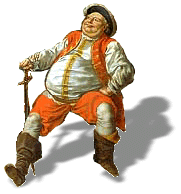
falstaffIn the documentary, Schama presented Shakespeare as writing for both “gents and groundlings”; both cold power-mongers and the “warm, earthy, beer-drinking England” represented by Elizabeth I’s favourite character, Falstaff. After Henry VIII’s reformation divorced him from Catherine of Aragon and England from Rome, Falstaff, says Schama, became “the living embodiment of a small country that suddenly has an outsize sense of itself”.

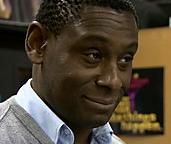
Shakespearian teacher: David HarewoodIn Macbeth, the Movie Star…and Me, Homeland actor David Harewood had five days to prepare pupils from Birmingham’s Washwood Heath Technology College to perform a scene from the Unlucky Play in Stratford-Upon-Avon. It was wonderful to see the kids become Shakespearians not only through Harewood’s tutelage but by the Bard’s living, visceral acquaintance with all of our insecurities. I cried when the actors finally transcended themselves and shone.

Schama, perhaps thinking of today, related that in the 1590s "skyrocketing" living costs sparked riots. Another connection is religious: Shakespeare wrote when "talking about religion could land you in prison, or worse".

Ours times are similar; the uneasy truce between Judaeo-Christian tradition and humanism, whose contradictions birthed modern Western culture, is threatened by sinister forces prepared to silence democracy’s atonal clamour. As the UN tells countries to "undermine national homogeneity" in the name of multiculturalism, programmes like these show that English culture gives everybody a voice. This is the only soil in which true multiculturalism can grow.

Gerry Dorrian
300 words

Click to go to Simon Schama's Shakespeare part 1: This England

Click to go to Macbeth, the Movie Star...and Me with David Harewood